





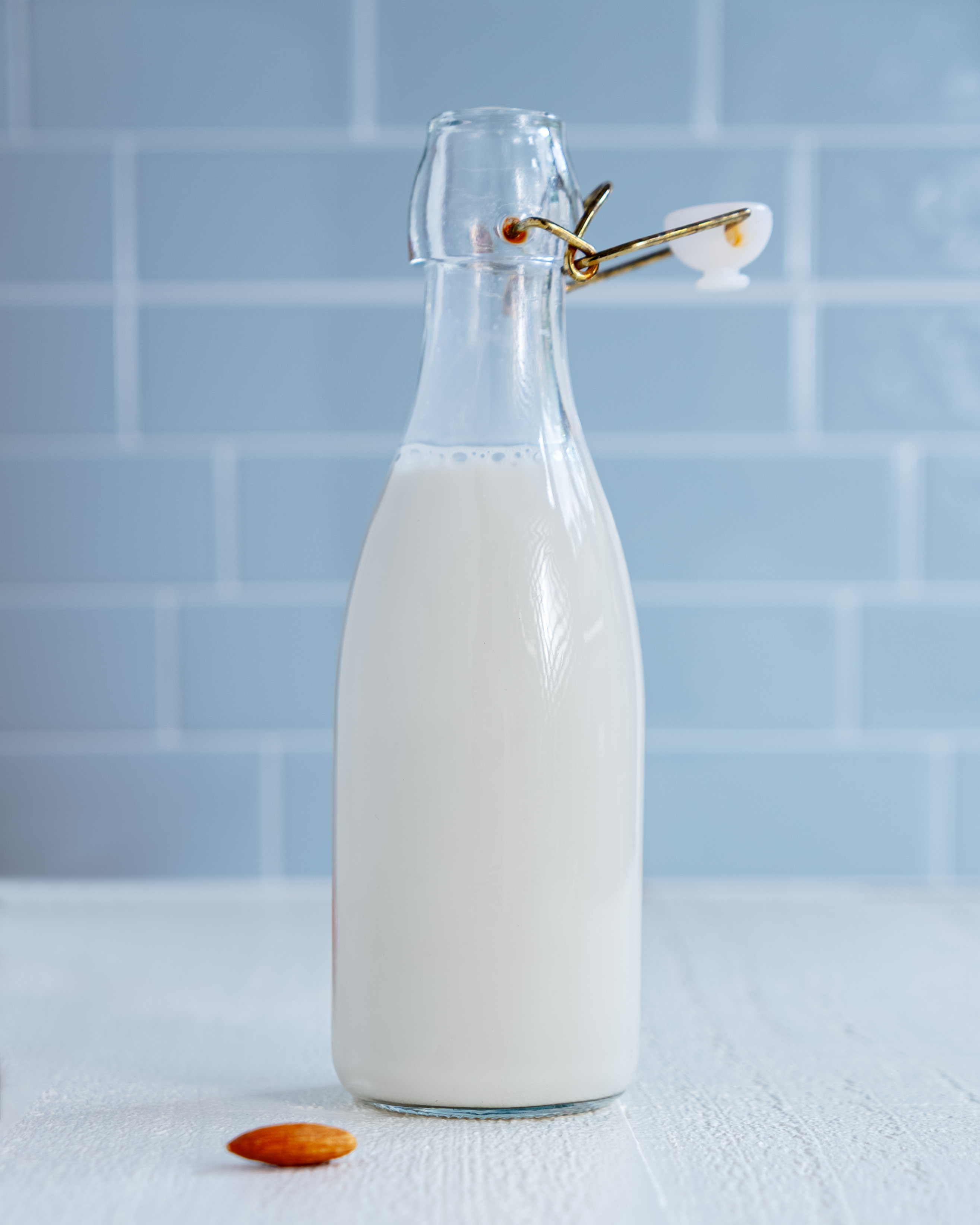
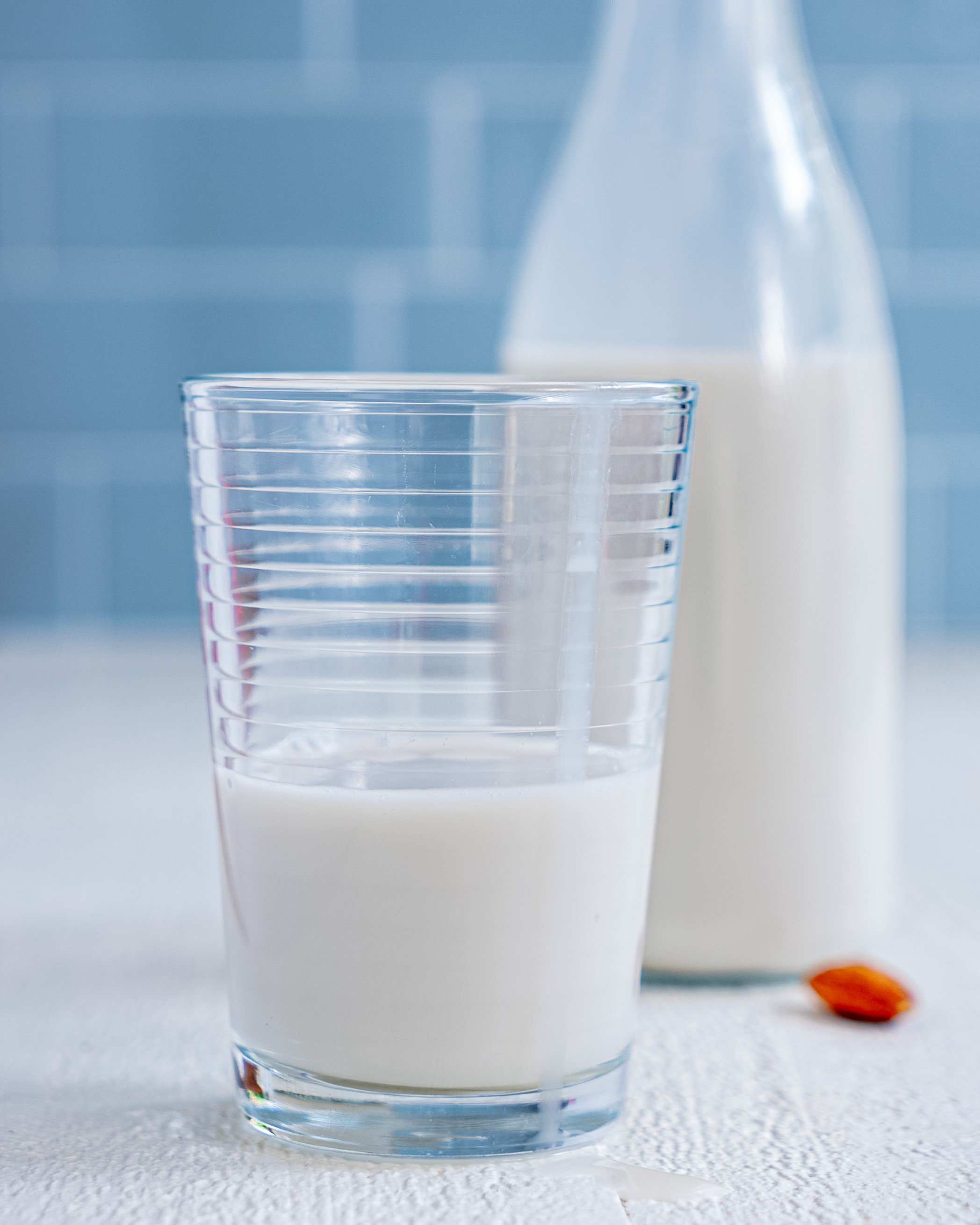
Almond Milk
Dairy-Free Milk & Cheese
Ingredients:
- 130 g (1 cup) raw whole almonds
- 960 ml (4 cups) filtered water
- 1–2 pitted dates or 15 ml (1 tbsp) maple syrup, to sweeten
- 5 ml (1 tsp) vanilla extract
- pinch of salt
Equipments:
- High-speed blender
- Large bowl
- Nut milk bag or fine-mesh cheesecloth
- Glass jar or bottle
Features:
20 minutes or less
Gluten-Free
Raw
Grain-Free
Soy-Free
Oil-Free
Refined Sugar-Free
Nutrition:
Servings 1 cup (240 ml) Calories 35 Carbohydrates 1.5 g Fat 2.5 g Fiber 0.5 g Protein 1 g
Monounsaturated 1.5 g Polyunsaturated 0.6 g Saturated 0.2 g Trans 0 g
Vitamin A 0 mcg Vitamin C 0 mg Vitamin D 0 mg
Calcium 200 mg Iron 0.3 mg Potassium 160 mg
Cholesterol 0 mg Sodium 150 mg Sugar 0 g Vitamin E 3 mg


.svg)
.svg)
Soak the almonds the full 8 hours or overnight — under-soaked almonds blend into a thinner, less creamy milk and leave more pulp behind.
Instructions:
- Soak the Almonds: Place 130 g (1 cup) raw whole almonds in a bowl and cover with cold water. Soak for at least 8 hours or overnight. Drain and rinse well.
- Blend: Add soaked almonds, 960 ml (4 cups) filtered water, optional dates or 1 tbsp maple syrup, optional 1 tsp vanilla extract, and a pinch of salt to a high-speed blender. Blend on high for 60–90 seconds until completely smooth.
- Strain: Pour through a nut milk bag or double-layered cheesecloth over a large bowl. Squeeze firmly to extract all the liquid. Save the almond pulp for baking.
- Store: Transfer to a sealed glass bottle or jar. Refrigerate for up to 4–5 days. Shake well before each use.
Almond Pulp: Don’t discard the leftover pulp — dry it in a low oven at 90°C (200°F) for 1–2 hours and use in baking or energy balls.
Common Mistakes: Don’t skip soaking whole almonds — unsoaked almonds produce a grainier, less creamy milk. Even a 1-hour soak makes a difference. Always blend on high for at least 60 seconds.
No-Strain Method: Use slivered almonds and blend for 90 seconds — no straining needed. The milk will be slightly less clear but perfectly drinkable.
Nut Swaps: The same method works for cashews (no straining), oats, or hemp seeds.
Storage: Refrigerate in a sealed glass jar for up to 4–5 days. Natural separation is normal — shake well before each use.
Sweetener: Dates give a richer, caramel-like sweetness; maple syrup is lighter and more neutral. Both are optional — unsweetened is best for cooking and savory uses.
Raw whole almonds produce the creamiest, cleanest-tasting milk. Soaking overnight softens the almonds, making them easier to blend and releasing more of their natural oils into the liquid. Slivered almonds skip the soaking and straining steps entirely — a great shortcut for a quick batch.
Filtered water is recommended over tap water — chlorine can affect the flavor. The ratio of 1 cup almonds to 4 cups water produces a milk similar to store-bought. Use less water (3 cups) for a creamier, richer milk; more water (5 cups) for a lighter result.
Dates are the best natural sweetener here — they blend completely into the milk and add a subtle caramel richness without any added refined sugar. Maple syrup is a lighter, quicker alternative.
Vanilla extract transforms plain almond milk into something that tastes premium and store-quality. Just 1 tsp makes a noticeable difference.
Salt is a flavor enhancer even in milk — a tiny pinch sharpens all the other flavors and prevents the milk from tasting flat.
Almond Milk
Ingredients:
- 130 g (1 cup) raw whole almonds
- 960 ml (4 cups) filtered water
- 1–2 pitted dates or 15 ml (1 tbsp) maple syrup, to sweeten
- 5 ml (1 tsp) vanilla extract
- pinch of salt
Equipments:
- High-speed blender
- Large bowl
- Nut milk bag or fine-mesh cheesecloth
- Glass jar or bottle
Features:
Why These Ingredients:
Raw whole almonds produce the creamiest, cleanest-tasting milk. Soaking overnight softens the almonds, making them easier to blend and releasing more of their natural oils into the liquid. Slivered almonds skip the soaking and straining steps entirely — a great shortcut for a quick batch.
Filtered water is recommended over tap water — chlorine can affect the flavor. The ratio of 1 cup almonds to 4 cups water produces a milk similar to store-bought. Use less water (3 cups) for a creamier, richer milk; more water (5 cups) for a lighter result.
Dates are the best natural sweetener here — they blend completely into the milk and add a subtle caramel richness without any added refined sugar. Maple syrup is a lighter, quicker alternative.
Vanilla extract transforms plain almond milk into something that tastes premium and store-quality. Just 1 tsp makes a noticeable difference.
Salt is a flavor enhancer even in milk — a tiny pinch sharpens all the other flavors and prevents the milk from tasting flat.
Prep:
Soak the almonds the full 8 hours or overnight — under-soaked almonds blend into a thinner, less creamy milk and leave more pulp behind.
Instructions:
- Soak the Almonds: Place 130 g (1 cup) raw whole almonds in a bowl and cover with cold water. Soak for at least 8 hours or overnight. Drain and rinse well.
- Blend: Add soaked almonds, 960 ml (4 cups) filtered water, optional dates or 1 tbsp maple syrup, optional 1 tsp vanilla extract, and a pinch of salt to a high-speed blender. Blend on high for 60–90 seconds until completely smooth.
- Strain: Pour through a nut milk bag or double-layered cheesecloth over a large bowl. Squeeze firmly to extract all the liquid. Save the almond pulp for baking.
- Store: Transfer to a sealed glass bottle or jar. Refrigerate for up to 4–5 days. Shake well before each use.